Two control layers do most of the work of keeping a wall durable: the air barrier, which stops air from moving through the assembly, and the vapour barrier, which slows water vapour from diffusing into it. They are often confused because a single material can sometimes do both jobs, but they solve different problems and follow different placement rules.
Air leakage control comes first
Natural Resources Canada is explicit on sequence: air leakage control is "the single most important retrofit activity, and it should be considered first in any upgrade strategy." Moving air carries far more heat — and far more moisture — than diffusion through a still material. A wall that is well insulated but leaky loses heat through the gaps and risks depositing moisture inside the assembly where warm indoor air meets cold surfaces.
Comprehensive air sealing means systematically finding and closing leakage paths with caulking, weatherstripping, gaskets and tapes. Common targets include:
- Window and door sashes and casings
- Baseboards, mouldings and the joint between wall finish and bottom plate
- Service penetrations — plumbing, ducts, wiring and chimney chases
- Ceiling fixtures and attic hatches
For gaps roughly 6 mm (1/4 in.) and wider, NRCan recommends a backer rod or foam rope packed into the joint before caulking, so the sealant forms a proper bead rather than slumping into the cavity. Sill plate gaskets and gasketed electrical boxes address leaks that caulk alone cannot reach.
The vapour barrier and the 1/3–2/3 rule
A vapour barrier resists the flow of water vapour from the warm, humid interior toward the cold exterior. Its placement is governed by a simple principle: it has to stay on the warm side so that vapour never reaches a surface cold enough to condense. NRCan states the vapour barrier "must be located on the warm side of the insulation," and where it sits part-way into a wall, the 1/3–2/3 rule applies.
The rule: no more than one third of the assembly's total insulating value may sit on the warm side of the vapour barrier, leaving at least two thirds on the cold side. That keeps the barrier warm enough to stay above the dew point. In very cold climates, or in homes with high moisture sources, the federal guidance says that warm-side fraction should be reduced to one quarter or less.
| Air barrier | Vapour barrier | |
|---|---|---|
| Stops | Bulk air movement | Vapour diffusion |
| Continuity | Must be continuous around the envelope | Must be on the warm side |
| Typical materials | Sealed sheathing, house wrap, taped polyethylene, foam | Polyethylene sheet, certain paints, foam board |
| Placement rule | Anywhere, if sealed and continuous | Inner third (1/3–2/3 rule) |
One material, two roles
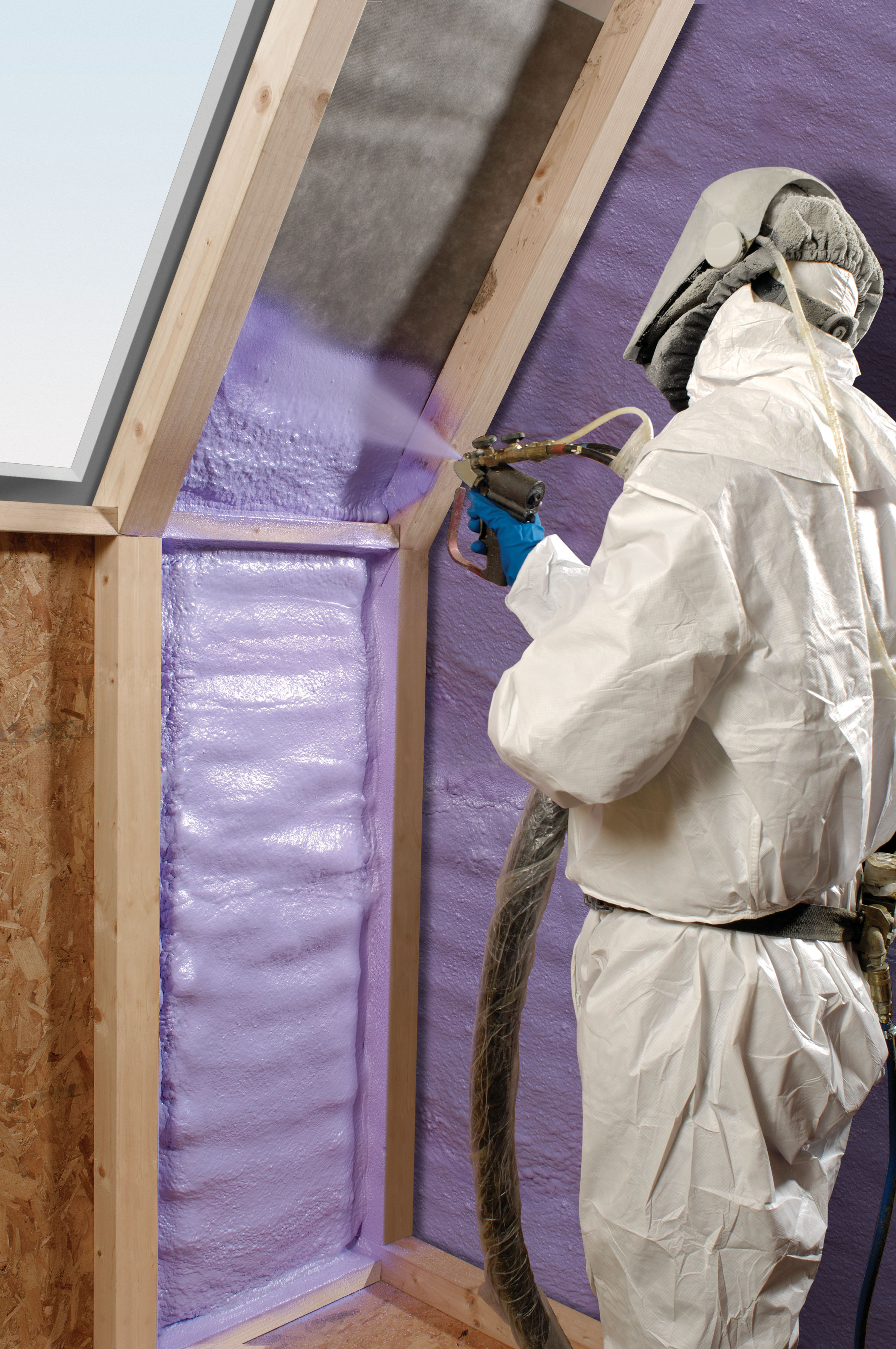
In many assemblies a single component covers both functions. A continuous run of taped polyethylene on the warm side can serve as the air barrier and the vapour barrier together; closed-cell spray foam can do the same in a cavity. The key is continuity for the air barrier and warm-side placement for the vapour barrier — a material only earns the title if it is detailed to meet those conditions.
Renovation cautions
Adding insulation to an existing wall shifts the dew point and can strand an old vapour barrier in the wrong place. NRCan's wall section advises checking the location and condition of any existing barrier — including plaster with multiple coats of paint, which can act as one — and notes that when new insulation is added outside an old wall, a new vapour barrier is only appropriate once enough insulating value sits on its cold side to satisfy the rule.
Where this connects
The thermal layer these barriers protect is covered in insulation types and R-value. The most concentrated air-leakage targets — operable windows and doors — have their own detailing rules in window sealing and weatherproofing.
References
- Natural Resources Canada. Keeping the Heat In — Section 4: Comprehensive air leakage control.
- Natural Resources Canada. Keeping the Heat In — Section 3: Materials.
- BC Housing. Best Practice Guide: Air Sealing and Insulation Retrofits for Single Family Homes (PDF).